Het eerste kwartaal van 2026 zit er alweer bijna op. De grote vraag: waar staat je team nu eigenlijk? Zijn de doelen van begin dit jaar nog realistisch? Welke plannen moeten worden bijgestuurd, en waar liggen de kansen voor Q2? Een goede kwartaalmeeting geeft antwoord op precies die vragen. Het is het moment waarop je team even stopt met rennen, terugkijkt op de afgelopen 13 weken, en richting geeft aan de komende periode. April en mei zijn ideale maanden om dit te doen: je hebt concrete Q1-resultaten om te bespreken, en je kunt de koers voor de rest van 2026 aanscherpen.
A quarterly meeting: what is it?
Een kwartaalmeeting is geen gewone maandagochtendvergadering. Het is een strategische sessie die je vier keer per jaar houdt om terug te kijken én vooruit te plannen. Elke kwartaalmeeting is in feite een schone lei: wat hebben we bereikt, wat pakken we de komende 13 weken aan, en hoe zorgen we dat we op koers blijven?
Het verschil met een reguliere vergadering zit in de diepgang. Je bespreekt niet alleen de lopende zaken, maar ook de grote lijnen: prestaties, financiën, klanttevredenheid en teamontwikkeling. Dat vraagt om goede voorbereiding, een duidelijke agenda en — niet onbelangrijk — een omgeving die uitnodigt tot focus en open gesprek.
Lees ook: Effectief vergaderen, zo doe je dat!
How long does a quarterly meeting last?
The ideal meeting lasts no longer than an hour. After that, people often begin to wander off, unless you take a break and provide energizing snacks. Many weekly meetings are scheduled an hour by default, because this is pretty much the norm. But have you noticed that meetings then often last exactly that hour, when sometimes you can be done in 15 minutes?

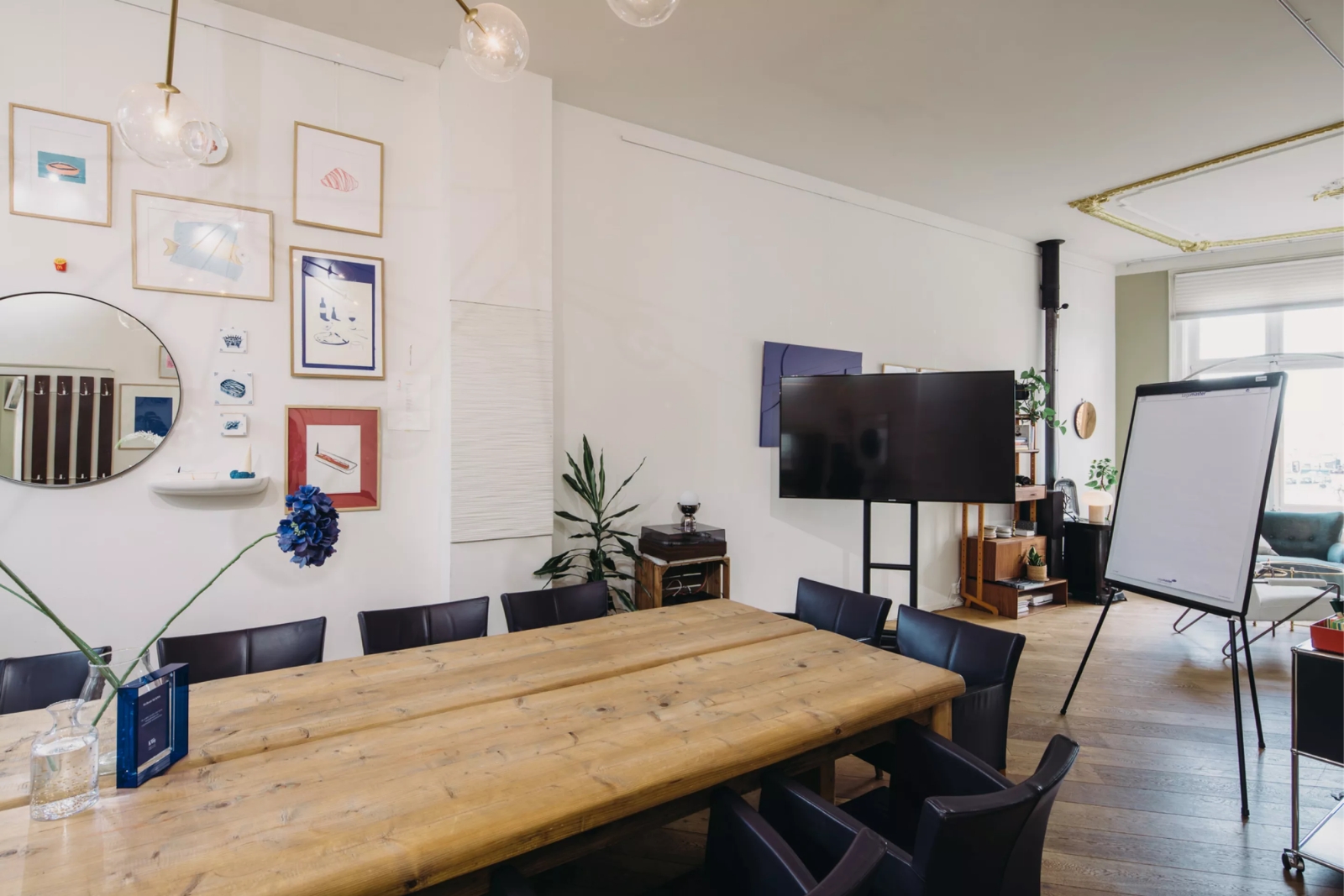
A quarterly meeting is different from a standard meeting. You take the time to both look back on the past three months and look ahead to the period ahead. These meetings often last longer than an hour because you go over everything thoroughly. To keep everyone focused, you schedule short breaks and make sure there is enough energy in the facilitation and catering. It's not for nothing that the most booked meeting rooms at KW9 are often combined with a catering package. Closing the quarterly meeting with a joint drink or private dinner is also among the options. We are happy to coordinate everything so that your team can get the most out of the meeting. Everything is possible!
A good approach is to determine in advance how long you want to talk about each agenda item. It is not a tragedy if you then run a minute late, but that should not happen structurally. And, of course, having meetings outside also has an impact. Because your body has to process all these new environmental stimuli, your senses are put on edge. This gets blood flowing to your brain and thus improves your ability to concentrate. That's how you get better and faster results at KW9 than if you're always sitting under the same system ceiling.
Let op: Let op: maart, april en mei zijn populaire maanden voor kwartaalmeetings en strategiesessies. Veel teams plannen nu hun follow-up sessies of halen gemiste Q1-meetings in. De beschikbaarheid bij KW9 loopt snel terug – wil je in Q2 nog bij ons vergaderen? Boek dan nu je datum.
Why is a quarterly meeting particularly important right now?
Begin maart is een cruciaal omslagpunt voor bedrijven. De nieuwjaarseuforie is voorbij, de eerste werkweken zitten erop en de realiteit dient zich aan: waar staan we écht? Teams die nu een kwartaalmeeting inplannen, kunnen:
- Bijsturen waar nodig (je hebt nog 4 weken in Q1!)
- Identify quick wins for February and March
- Ensuring Q1 goals remain achievable
- Maintaining energy after a good start in January
- Or creating momentum after a slow start
Who is the quarterly meeting for and what does it cost?
Managers, team members and sometimes even external parties such as investors or customers can participate in the quarterly meeting. It is a good time to discuss together what is going on and go over future plans.
It sounds cozy, and it is. But don't underestimate what a quarterly meeting costs. Do the math: count the number of people at the table and multiply that by your company's average hourly rate. We 'zuunige Nederlanders' spend about 65 (!) billion euros annually on meetings. And did you know that an effective meeting table should actually have no more than seven participants? For every additional person, decision-making ability drops by ten percent.
Of course, such an external meeting location as KW9 comes at a cost. But the resulting time pressure on the quarterly meeting makes for faster decisions and decisive ideas. So your quarterly meeting becomes more effective. In this way, an off-site meeting location pays for itself. And that's always good news. Read also: Feel at home: small-scale meetings in Amsterdam

Prepare your quarterly meeting well
An effective quarterly meeting has a clear purpose. Ask yourself: what needs to be discussed and what do we want to accomplish with each agenda item? Is it about a decision, a status update or a brainstorming session? A quarterly meeting without a purpose is just paid bubbling. Also read: How do you organize a heath day for your team?
Also think about who you invite. Who really needs to be there? Put together an agenda and divide the topics into time blocks. That way you avoid something that can be discussed in 20 minutes taking an hour. Give everyone who attends a clear assignment; does everyone have something to contribute, for example? Schedule time for that.
In many quarterly meetings there is a lot of talking, but it is often not clear afterwards what was decided. This must change, because the purpose of the meeting is to arrive at insights and decisions together. Make sure that at the end of the quarterly meeting it is clear who is doing what, and when. Also immediately discuss a deadline for action items.
Topics for a quarterly meeting
Topics of a quarterly meeting are generally fairly standard. It is mainly about determining your priorities for the coming quarter. For example, consider the following agenda items:
Achievements and goals: Begin by looking back at the past quarter. Was the launch of the new product line a hit? What sales figures did you exceed? Also discuss what went less well - perhaps customer response to a marketing campaign was less than expected. That way you learn from every experience.
Finance: Take a close look at your finances for the past quarter. You may discover that you saved significantly on software by switching platforms, or that an unexpected increase in production costs squeezed profit margins. This part of your quarterly meeting is important to determine where you can invest or cut back.
Customer satisfaction: Collect feedback that customers have provided via social media, emails or customer service. For example, were customers enthusiastic about the improved speed of customer service, or were there complaints about order delivery times? These insights are valuable for service improvements in the coming quarter.
Team development: how is the team doing? Perhaps someone on the sales team has indicated she wants to take a time management course, or the development team needs extra support because of new projects coming up. A happy team is a productive team, so take time for this discussion during your quarterly meeting.

Organize your next quarterly meeting at KW9 in Amsterdam!
KW9 ligt aan de Kromme Waal 9 in Amsterdam Centrum, op 5 minuten lopen van Centraal Station. Onze drie ruimtes bieden plek voor groepen van 4 tot 16 personen in een historisch 18e-eeuws grachtenpand. Geen standaard vergaderzaal, maar een plek met daglicht, kunst, rust aan de gracht en persoonlijke aandacht van Esther en het KW9-team.
April en mei zijn populaire maanden voor kwartaalmeetings. Wil je zeker zijn van je datum? Vraag dan nu een vrijblijvende offerte aan of bel Esther direct op +31 6 17 28 51 05.
Ervaar hoe waardevol extern vergaderen in Amsterdam is voor jouw volgende kwartaalmeeting.